
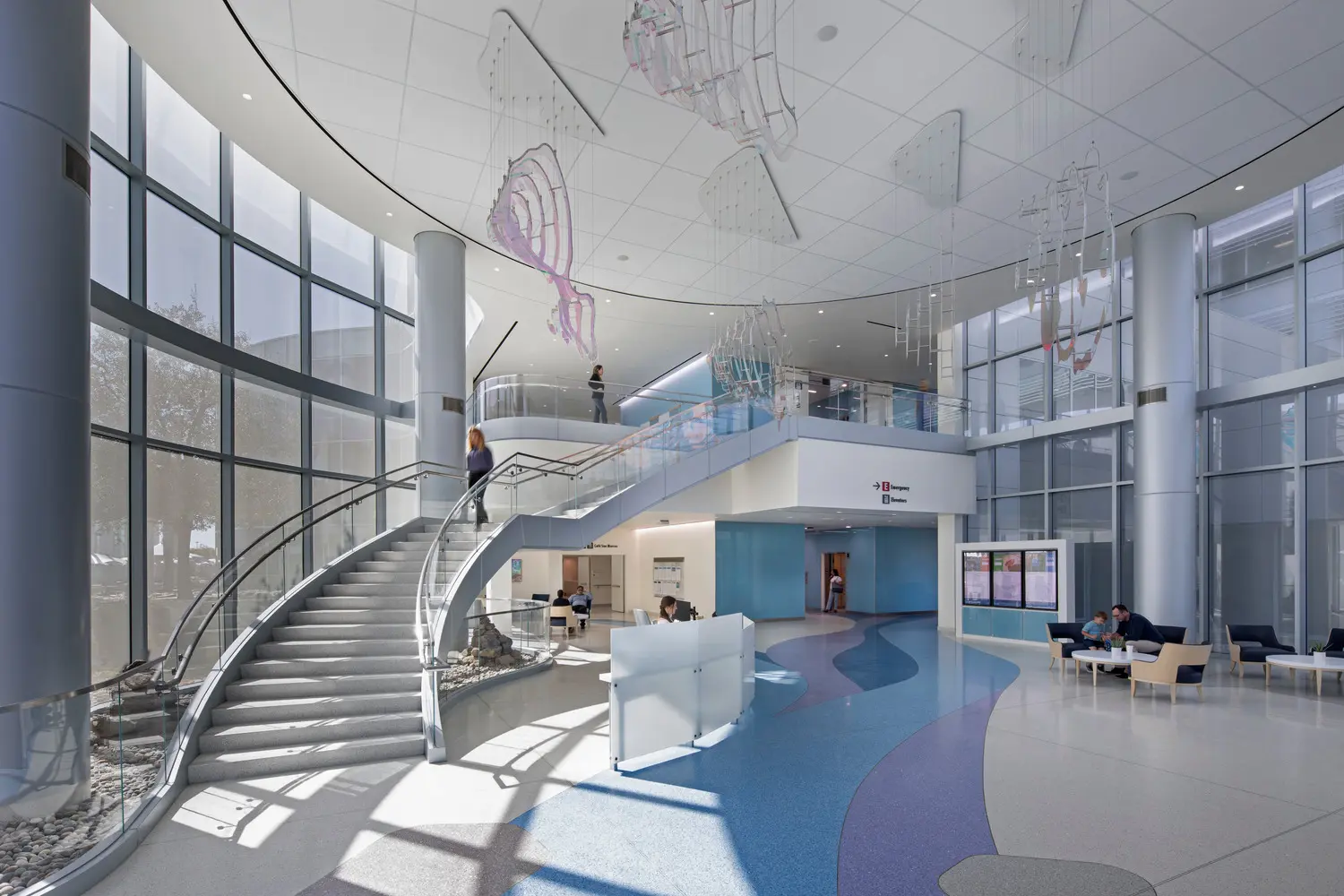
Healthcare architecture and hospital design by Soul Architects in India

Healthcare Hub

Healthcare Architecture — Designing the Future of Healing Environments

India’s emerging healthcare infrastructure needs intelligent, healing-centric, sustainable and operationally efficient environments.

India’s Emerging Need for Specialized Healthcare Architecture

Healthcare architecture is no longer just about constructing buildings with hospital beds and operation theatres.

Modern healthcare environments demand a deep understanding of patient psychology, medical workflow, infection control, sustainability, operational efficiency, technology integration, and long-term adaptability. The design of a healthcare facility directly influences clinical outcomes, staff efficiency, patient recovery, and the overall quality of care delivered within the institution.

At Soul Architects, healthcare architecture is approached as a highly specialized discipline where architecture meets medicine, engineering, human behavior, and evidence-based planning. Every healthcare project requires a careful balance between functionality, emotional well-being, regulatory compliance, technology integration, and future scalability.

As one of the emerging healthcare architecture firms in India, Soul Architects focuses on creating healthcare spaces that are intelligent, healing-centric, sustainable, and operationally efficient. From multispeciality hospitals and medical colleges to outpatient centers, diagnostic facilities, ICUs, and healthcare interiors, every project is designed around patient experience, workflow optimization, and clinical excellence.

The healthcare sector in India is expanding rapidly. With increasing demand for advanced healthcare infrastructure across Lucknow, Uttar Pradesh, and the rest of India, there is a growing need for hospital architects who understand not only aesthetics but also the science behind healthcare planning. Modern healthcare facilities must support infection control, emergency response efficiency, patient privacy, staff movement, equipment integration, and sustainable operational systems.

Healthcare architecture today must answer critical questions

  • How can patient stress be reduced through design?
  • How can circulation pathways improve operational efficiency?
  • How can architecture minimize infection transmission?
  • How can hospitals remain adaptable for future healthcare technologies?
  • How can sustainability reduce operational costs for healthcare institutions?
  • How can interiors support faster healing and better patient outcomes?

These questions form the foundation of evidence-based healthcare design.

Specialized Expertise

Why Healthcare Architecture Requires Specialized Expertise

Designing a residence, commercial office, or retail space differs fundamentally from designing a healthcare facility. Hospitals are among the most complex building typologies in the world. Every department within a healthcare institution has unique operational requirements, technical systems, and spatial relationships.

An inefficiently planned hospital can create operational bottlenecks that impact both patient care and hospital profitability. Poor workflow planning can increase staff fatigue, delay emergency response, and reduce overall efficiency.

At Soul Architects, healthcare planning begins long before architectural drawings are prepared. The process starts with understanding the vision of the healthcare institution, patient demographics, departmental relationships, operational goals, and future growth potential.

Every healthcare project is treated as a system rather than merely a structure.

Patient movement patterns Clinical workflows Emergency access planning Infection control zoning HVAC and air pressure systems Critical care planning Medical equipment integration Fire and life safety compliance Biomedical waste management Staff circulation efficiency Future expansion planning Accessibility standards Healthcare ergonomics Sustainable healthcare systems

Healing Environments

The Role of Architecture in Patient Healing

Research across healthcare design globally has shown that architecture directly impacts patient recovery and psychological well-being. Healing environments can reduce stress, improve patient satisfaction, support better clinical outcomes, and enhance staff productivity.

Healthcare spaces should not feel intimidating or emotionally exhausting. Architecture has the power to transform hospitals into environments that support comfort, reassurance, dignity, and healing.

At Soul Architects, patient-centric design remains central to healthcare planning. Every corridor, waiting area, consultation room, and critical care zone is planned with user experience in mind.

Natural daylight optimization Noise reduction strategies Therapeutic interiors Efficient navigation Human-centered planning Privacy-focused layouts Green spaces Family-centered spaces

Hospital Systems

Hospital Planning and Workflow Optimization

One of the most important aspects of healthcare architecture is workflow efficiency. Hospitals operate as highly interconnected systems where patient movement, staff circulation, equipment transport, emergency access, and service logistics must function seamlessly.

Workflow-oriented healthcare planning helps reduce patient waiting times, improve staff efficiency, enhance emergency response, reduce operational confusion, minimize cross-contamination risks, improve departmental coordination, and enhance patient satisfaction.

A well-designed hospital considers multiple circulation systems simultaneously: public circulation, patient circulation, emergency circulation, staff circulation, service circulation, biomedical waste movement, and sterile and non-sterile pathways.

At Soul Architects, healthcare planning focuses heavily on circulation intelligence. Proper zoning between departments such as emergency, diagnostics, OPD, ICUs, operation theatres, inpatient wards, and administrative areas significantly improves overall hospital functionality.

Evidence-Based Healthcare Design

Healthcare architecture is increasingly driven by evidence-based design principles. Instead of relying purely on aesthetics, modern hospital planning uses research and clinical insights to create better-performing healthcare environments.

Evidence-based design considers infection reduction strategies, patient recovery optimization, staff stress reduction, acoustic control, lighting psychology, air quality improvement, ergonomic efficiency, behavioral psychology, and wayfinding efficiency.

The objective is not merely to create visually impressive buildings but to create healthcare environments that perform better clinically and operationally.

At Soul Architects, design decisions are guided by healthcare functionality, operational logic, and long-term institutional efficiency.

ICU and Critical Care Planning

Critical care environments require some of the most technically sophisticated planning within healthcare architecture. Intensive Care Units demand precision in infection control, visibility, emergency access, equipment integration, and environmental control.

ICU design considerations include air pressure management, isolation room planning, nurse station visibility, medical gas systems, equipment accessibility, noise control, emergency circulation, family interaction zones, staff efficiency, and future adaptability.

Poor ICU planning can negatively affect patient outcomes and operational efficiency. Critical care spaces must support rapid intervention while maintaining infection safety and patient comfort.

Healthcare architecture at Soul Architects emphasizes intelligent ICU layouts that prioritize both clinical functionality and human-centered care.

Explore ICU planning design

Operation Theatre and Surgical Planning

Operation theatre complexes represent one of the most sensitive areas within healthcare infrastructure. Surgical environments require strict zoning, sterile circulation, infection control, HVAC precision, and workflow separation.

Operation theatre planning includes sterile and non-sterile zoning, scrub station placement, air filtration systems, modular OT integration, instrument movement, staff circulation, emergency access, recovery room adjacency, and surgical workflow optimization.

Modern surgical planning also integrates advanced medical technologies, robotics compatibility, and future flexibility.

Soul Architects approaches operation theatre planning with a strong focus on clinical precision, safety, efficiency, and long-term scalability.

OPD and Patient Flow Design

Outpatient departments are among the busiest areas within hospitals. Poor OPD planning can lead to overcrowding, confusion, long waiting times, and operational inefficiency.

Effective OPD design focuses on intuitive patient navigation, queue management, consultation privacy, comfortable waiting zones, efficient registration flow, diagnostic adjacency, accessibility, reduced congestion, and digital healthcare integration.

Patient flow planning plays a major role in improving user experience and operational productivity.

At Soul Architects, outpatient facilities are designed to support smooth patient journeys while maintaining comfort, privacy, and efficiency.

Infection Control Through Design

The importance of infection prevention in healthcare design has become increasingly critical globally. Healthcare architecture plays a direct role in minimizing infection transmission.

Design-based infection control strategies include airflow planning, isolation zoning, surface material selection, touchpoint reduction, hand hygiene integration, clean and dirty circulation separation, HVAC filtration systems, biomedical waste zoning, and sterile workflow planning.

Healthcare facilities must be designed to reduce contamination risks without compromising operational efficiency.

Soul Architects integrates infection control planning into the earliest stages of healthcare design development.

Sustainable Healthcare

Sustainable Healthcare Architecture

Sustainability has become a major priority in modern healthcare infrastructure. Hospitals are high-energy buildings that operate continuously and consume significant resources.

Sustainable healthcare architecture focuses on energy efficiency, natural ventilation, daylight optimization, water conservation, waste management, solar integration, green materials, thermal performance, reduced operational costs, and long-term environmental responsibility.

Sustainable hospital design is not only environmentally responsible but also economically beneficial for healthcare institutions.

At Soul Architects, sustainability is integrated through passive design strategies, efficient systems planning, material optimization, and long-term operational thinking.

Read about sustainable hospital design

Healthcare Interior Design

Healthcare interiors influence patient psychology, staff morale, and the overall healing experience. Modern healthcare interiors must balance hygiene, comfort, functionality, and emotional well-being.

Healthcare interior design includes healing color palettes, ergonomic furniture planning, patient-friendly materials, acoustic comfort, infection-resistant surfaces, human-centered lighting, wayfinding systems, therapeutic waiting areas, and staff wellness spaces.

Healthcare interiors should create environments that feel reassuring rather than stressful.

Soul Architects focuses on creating healthcare interiors that support healing, operational functionality, and institutional identity.

Explore hospital interior design

Medical College and Institutional Healthcare Design

Medical colleges and teaching hospitals require highly integrated campus planning. These institutions combine education, research, patient care, residential facilities, and administrative infrastructure.

Medical campus planning involves academic zoning, clinical integration, research facilities, student circulation, auditorium planning, hostel infrastructure, faculty spaces, emergency accessibility, and future campus expansion.

Institutional healthcare architecture requires long-term master planning strategies that accommodate future growth and evolving healthcare technologies.

Explore healthcare master planning

Technology Integration in Healthcare Architecture

Healthcare facilities are becoming increasingly technology-driven. Modern hospitals require architecture that supports digital systems, smart infrastructure, telemedicine, robotics, and integrated healthcare technologies.

Technology-oriented healthcare planning includes smart building systems, digital patient management infrastructure, telemedicine integration, medical equipment planning, IT server zoning, future-ready adaptability, data infrastructure, and smart monitoring systems.

Healthcare architecture today must anticipate technological evolution over decades.

Long-Term Value

The Importance of Flexibility in Hospital Design

Healthcare technologies, medical practices, and patient demands continue to evolve rapidly. Hospitals designed without future flexibility often become operationally outdated within years.

Flexible healthcare architecture allows departmental expansion, equipment upgrades, future renovation adaptability, infrastructure scalability, technology integration, and evolving healthcare models.

Future-ready planning significantly improves the lifecycle value of healthcare infrastructure investments.

Soul Architects prioritizes adaptable planning strategies that support long-term institutional growth.

Lucknow, Uttar Pradesh and India

Local Healthcare Infrastructure in Lucknow and Uttar Pradesh

Lucknow and Uttar Pradesh are witnessing rapid growth in healthcare infrastructure. Increasing urbanization, rising healthcare awareness, medical tourism, and institutional investments are driving demand for advanced healthcare facilities.

This creates significant opportunities for specialized healthcare architecture that can support multispeciality hospitals, diagnostic centers, medical colleges, cancer care facilities, rehabilitation centers, mother and child hospitals, and critical care facilities.

Healthcare architecture in Lucknow requires a balance between modern clinical standards, local environmental conditions, operational efficiency, and regional healthcare needs.

Soul Architects aims to contribute to the evolution of healthcare infrastructure in Lucknow and across India through thoughtful, sustainable, and evidence-based architectural planning.

Why Soul Architects

Precision, empathy, technical expertise and long-term strategic thinking.

Healthcare architecture demands precision, empathy, technical expertise, and long-term strategic thinking. At Soul Architects, every project is approached through a collaborative and research-driven process that prioritizes healthcare efficiency, patient well-being, sustainability, and institutional growth.

The design philosophy is rooted in evidence-based planning, human-centered architecture, sustainability, workflow optimization, technological adaptability, and healthcare specialization.

From concept development to execution strategy, the objective remains creating healthcare environments that improve lives and support better healthcare delivery systems.

Healthcare Project Inquiry

Build the Future of Healthcare Infrastructure

The future of healthcare depends not only on medical technology but also on the environments where care is delivered. Thoughtful healthcare architecture has the power to improve operational efficiency, support clinical excellence, enhance patient well-being, and create sustainable healthcare systems for generations to come.

Soul Architects continues to explore healthcare design through the lens of innovation, empathy, sustainability, and evidence-based planning — shaping healthcare environments that are intelligent, adaptable, and deeply human-centered.

Frequently Asked Questions

Healthcare Architecture FAQs

Healthcare architecture is a specialized field of architecture focused on designing hospitals, clinics, medical colleges, healthcare interiors, and healthcare infrastructure with emphasis on patient care, operational efficiency, infection control, and sustainability.

Hospitals are highly complex facilities that require careful planning for patient flow, emergency access, infection control, staff movement, medical equipment integration, and operational efficiency.

A good healthcare architect understands healthcare workflows, patient psychology, sustainability, medical technologies, infection control, and long-term institutional planning alongside architectural design.

Healthcare architecture services may include hospital planning, master planning, healthcare interiors, ICU planning, operation theatre design, medical college planning, sustainable healthcare design, and patient flow optimization.

Sustainable hospitals reduce operational costs, improve energy efficiency, support environmental responsibility, and create healthier indoor environments for patients and staff.

Healthcare environments influence stress levels, comfort, recovery speed, staff productivity, and overall patient experience through lighting, acoustics, spatial planning, and interior design.

WhatsApp
Call WhatsApp Enquire