Hospital interior design and healing-centered healthcare interiors by Soul Architects

Healing-Centered Healthcare Interiors

Hospital Interior Design — Creating Healing-Centered Healthcare Environments Through Evidence-Based Design

Patient-centric healthcare interior planning for hospitals, clinics, ICUs, waiting areas, wayfinding systems and emotionally supportive healing environments.

Evidence-Based Healthcare Interior Planning

Healthcare interiors directly influence how patients feel, recover, navigate, interact, and experience healthcare environments.

Modern hospitals are no longer viewed merely as clinical institutions focused solely on treatment. Healthcare spaces today are increasingly designed around patient well-being, emotional comfort, operational efficiency, infection control, staff productivity, and healing-centered experiences.

The role of hospital interior design has evolved significantly in recent years. Healthcare interiors are now expected to balance functionality, hygiene, sustainability, emotional reassurance, and architectural sophistication within highly demanding operational environments.

Research in evidence-based healthcare design has demonstrated that the physical environment can influence patient stress, recovery experience, anxiety levels, staff fatigue, operational efficiency, and overall healthcare satisfaction. Thoughtfully designed healthcare environments contribute to calmer patient experiences, better navigation, reduced stress, and more organized healthcare operations.

At Soul Architects, hospital interior design is approached through a combination of healthcare intelligence, architectural sensitivity, human-centered planning, and evidence-based design principles. Every healthcare interior is designed to create environments that feel calming, intuitive, operationally efficient, and emotionally supportive.

The objective is not merely to create visually attractive hospitals, but to create healthcare environments that improve the overall quality of healthcare experience for patients, caregivers, and medical professionals.

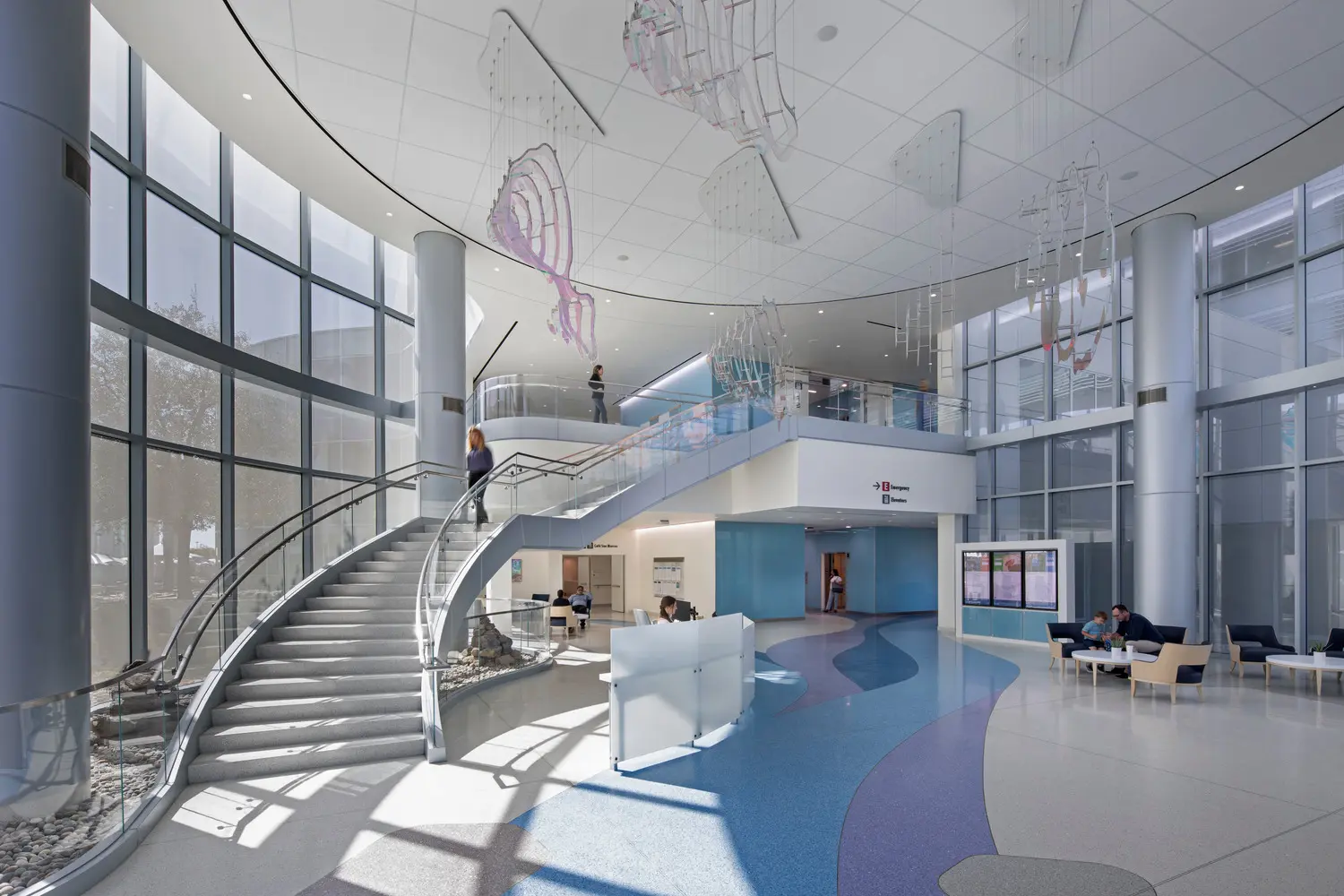
Healthcare Experience Design

The Evolution of Healthcare Interior Design

Traditional hospital interiors were often designed primarily around operational functionality with limited focus on emotional experience or patient psychology. Many healthcare environments historically felt sterile, intimidating, visually harsh, and emotionally stressful.

Modern healthcare design philosophy has shifted significantly toward creating healing environments, patient-centric spaces, stress-reducing interiors, emotionally calming healthcare environments, and hospitality-inspired patient experiences.

Evidence-based healthcare design now emphasizes the relationship between built environments and healthcare outcomes. Research suggests that aspects such as lighting, acoustics, privacy, visual comfort, and connection to nature can positively influence patient well-being and reduce anxiety levels.

At Soul Architects, healthcare interiors are designed around this evolving understanding of healing-centered environments where architecture and interior design work together to improve healthcare experience.

Why Interiors Matter

Why Healthcare Interiors Matter

Hospital interiors influence patient psychology, stress levels, navigation clarity, staff productivity, healthcare workflow, emotional comfort, and perception of care quality.

Healthcare environments often represent emotionally sensitive experiences for patients and families. Poorly designed interiors can increase anxiety, confusion, stress, and emotional discomfort.

Thoughtful healthcare interiors help create emotional reassurance, intuitive movement, calmer waiting experiences, operational clarity, and visually organized environments.

At Soul Architects, interior environments are carefully planned to support both operational performance and human comfort.

Healing Environments

Healing Environments and Evidence-Based Healthcare Design

The concept of healing environments has become central to modern healthcare architecture and interior design. Evidence-based design focuses on using scientific and behavioral research to improve healthcare spaces and support better patient and staff outcomes.

Healing-centered healthcare interiors focus on stress reduction, natural light optimization, acoustic comfort, visual calmness, privacy, positive distractions, connection to nature, and emotional well-being.

Studies suggest that exposure to carefully designed healthcare environments can reduce anxiety, improve patient satisfaction, and support healing experiences.

At Soul Architects, healthcare interior planning integrates evidence-based principles with architectural clarity and operational functionality.

Stress reduction Natural daylight Acoustic comfort Privacy Positive distractions Connection to nature Visual calmness Patient dignity

Patient-Centric Healthcare Interior Design

Modern healthcare design increasingly prioritizes patient experience as a critical aspect of healthcare quality.

Patient-centric healthcare interiors focus on intuitive navigation, visual comfort, privacy, family-centered spaces, emotional reassurance, waiting area comfort, accessibility, and reduced stress environments.

Patients often experience fear, uncertainty, anxiety, and emotional vulnerability within healthcare settings. Interior environments should help reduce these psychological pressures rather than intensify them.

At Soul Architects, patient-centered healthcare interiors are designed to create spaces that feel organized, calming, human-centered, and emotionally supportive.

Explore patient-centric hospital planning

Healthcare Space Planning and Interior Workflow

Hospital interiors must support highly complex operational systems. Effective healthcare interior planning requires understanding patient circulation, emergency movement, staff workflows, sterile pathways, equipment accessibility, waiting area management, and healthcare zoning.

Poor space planning creates overcrowding, confusion, inefficient movement, operational bottlenecks, and patient stress.

At Soul Architects, healthcare interiors are planned strategically to improve circulation efficiency, workflow clarity, and operational coordination across healthcare environments.

Departments such as OPD, diagnostics, ICU, operation theatres, inpatient wards, and emergency units must function cohesively through intelligent interior planning.

Explore healthcare workflow optimization

Waiting Areas and Patient Experience Design

Waiting environments play a major role in shaping healthcare experience. Patients and caregivers often spend significant emotional time in waiting areas under stressful conditions.

Healthcare waiting spaces should support emotional calmness, visual comfort, intuitive orientation, acoustic balance, seating comfort, privacy, and family interaction.

Research in healthcare design increasingly emphasizes the importance of reducing environmental stressors within healthcare interiors.

At Soul Architects, waiting environments are designed to feel more welcoming, organized, and emotionally reassuring rather than crowded or institutionally cold.

ICU and Critical Care Interiors

Critical care environments require highly specialized interior planning. ICU interiors must balance clinical efficiency, visibility, patient comfort, infection control, equipment accessibility, acoustic management, and emotional sensitivity.

Critical care spaces often involve prolonged patient stays and emotionally demanding conditions for families and caregivers.

ICU interior planning includes patient visibility, lighting optimization, acoustic comfort, ergonomic layouts, family interaction zones, and infection-resistant materials.

At Soul Architects, ICU interiors are designed to support both healthcare functionality and psychologically supportive healing environments.

Explore ICU planning and design

Infection-Resistant Interior Materials

Healthcare interiors require materials capable of supporting hygiene, durability, and infection prevention.

Healthcare material selection involves non-porous surfaces, antimicrobial finishes, easy maintenance, stain resistance, durability, and low-emission materials.

Evidence-based healthcare design increasingly emphasizes the role of materials and finishes in infection prevention and operational hygiene.

At Soul Architects, material selection balances hygiene, durability, tactile comfort, visual warmth, and sustainability.

The objective is to create healthcare environments that feel clean and calming without appearing visually harsh or sterile.

Explore NABH hospital planning

Lighting Design in Healthcare Interiors

Lighting significantly affects mood, stress levels, patient comfort, staff fatigue, circadian rhythms, and spatial perception.

Healthcare lighting should support visual comfort, clinical functionality, emotional calmness, reduced glare, and natural light integration.

Research suggests that daylight exposure and visually comfortable environments positively influence patient experience and healthcare outcomes.

At Soul Architects, healthcare lighting design integrates daylight optimization, layered lighting systems, indirect lighting, patient-friendly illumination, and staff-focused task lighting.

The goal is to create interiors that feel balanced, welcoming, and visually calming.

Acoustic Comfort in Healthcare Environments

Noise is one of the most overlooked stress factors within hospitals. Excessive noise contributes to patient stress, sleep disruption, staff fatigue, reduced concentration, and emotional discomfort.

Healthcare acoustic planning focuses on sound absorption, material selection, spatial zoning, equipment noise reduction, and quieter patient environments.

At Soul Architects, healthcare interiors are designed with acoustic sensitivity to improve comfort and support calmer healing environments.

Wayfinding and Navigation Design

Hospitals are among the most cognitively demanding building environments. Poor navigation creates confusion, stress, delays, and negative patient experiences.

Healthcare wayfinding includes visual orientation systems, signage planning, circulation clarity, intuitive layouts, color zoning, and landmark-based navigation.

Evidence increasingly supports the importance of intuitive navigation systems in reducing cognitive stress within healthcare environments.

At Soul Architects, healthcare interiors are designed to improve navigation clarity and patient orientation through spatial organization and intuitive planning.

Sustainable Healthcare Interiors

Sustainability has become increasingly important in healthcare interiors. Sustainable healthcare design focuses on environmentally responsible materials, low-VOC finishes, daylight optimization, energy-efficient lighting, durable interior systems, and healthy indoor environments.

Sustainable interiors support healthier patient environments, reduced environmental impact, and long-term operational efficiency.

At Soul Architects, sustainability is integrated into healthcare interiors through intelligent material selection and environmentally responsive design strategies.

Explore sustainable healthcare infrastructure

Future-Ready Healthcare Interior Design

Healthcare systems continue evolving rapidly through digital healthcare integration, telemedicine, smart healthcare systems, changing patient expectations, and flexible treatment environments.

Future-ready healthcare interiors must remain adaptable and scalable.

At Soul Architects, healthcare interiors are designed to support long-term operational flexibility and future technological integration.

Why Soul Architects

Healthcare Interiors Designed Around Experience, Workflow and Healing

Soul Architects combines healthcare architecture, evidence-based design, operational planning, and human-centered interior design to create healthcare environments that are functional, emotionally supportive, and future-ready.

The practice focuses on patient-centric healthcare interiors, evidence-based healthcare design, healthcare workflow optimization, healing environments, sustainable healthcare interiors, operational efficiency, and healthcare experience design.

Every healthcare project is approached strategically to improve both healthcare operations and human experience.

Consultation Areas

Planning a Hospital or Healthcare Interior Design Project?

Whether you are developing a hospital, clinic, healthcare campus, diagnostic center, ICU facility, or patient-centered healthcare environment, thoughtful healthcare interiors play a critical role in shaping healthcare experience and operational efficiency.

Soul Architects focuses on creating healthcare interiors that balance healing-centered design, operational intelligence, patient comfort, workflow efficiency, sustainability, and future adaptability.

Hospital Interior Design Healthcare Interior Planning ICU Interiors Patient-Centric Healthcare Design Healthcare Wayfinding Healing Environment Design Sustainable Healthcare Interiors

Frequently Asked Questions

Hospital Interior Design FAQs

Hospital interiors directly influence patient comfort, stress levels, navigation clarity, operational efficiency, and overall healthcare experience.

Evidence-based healthcare design uses scientific research and behavioral studies to improve healthcare environments and support better patient and staff outcomes.

Healing environments are healthcare spaces designed to reduce stress, improve comfort, support emotional well-being, and create better healthcare experiences.

Lighting, acoustics, layout, materials, privacy, and navigation all influence patient stress levels, comfort, and emotional experience.

Effective wayfinding reduces confusion, stress, navigation errors, and cognitive burden for patients and visitors.

Healthcare interior services may include hospital interior planning, ICU interiors, waiting area design, healthcare wayfinding, clinic interiors, patient-centered design, and healthcare space planning.

WhatsApp
Call WhatsApp Enquire