
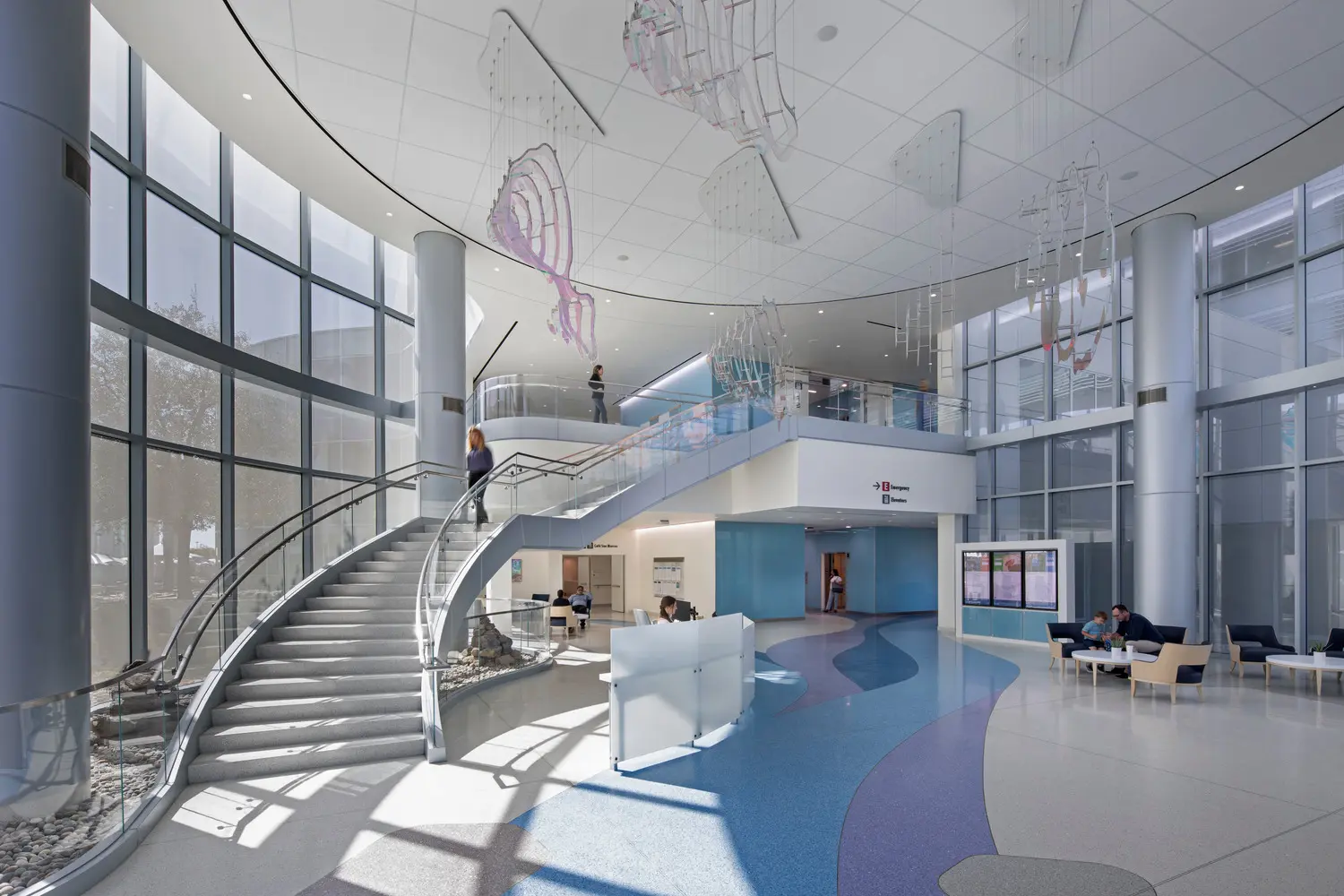
ICU planning and critical care architecture by Soul Architects

Critical Care Architecture

ICU Planning and Design — Creating Future-Ready Critical Care Infrastructure Through Evidence-Based Healthcare Architecture

ICU architecture, critical care workflow optimization, infection control planning, medical systems coordination and future-ready intensive care infrastructure.

Evidence-Based ICU Planning

Critical care environments represent one of the most technically demanding and operationally sensitive areas within healthcare infrastructure.

Intensive Care Units function under continuously high-pressure clinical conditions where architecture, workflow efficiency, infection control, medical technology integration, patient monitoring, emergency response, and emotional sensitivity must work together seamlessly.

Modern ICU planning extends far beyond simply placing beds and medical equipment inside a clinical environment. Critical care architecture today requires highly specialized planning focused on patient safety, healthcare workflow optimization, emergency accessibility, visibility, acoustic comfort, infection prevention, sustainability, and future adaptability.

As healthcare systems continue evolving across India, the need for intelligently planned critical care infrastructure has become increasingly important. Hospitals today require ICUs capable of supporting advanced medical technologies, changing patient needs, emergency preparedness, and long-term operational flexibility.

At Soul Architects, ICU planning and design is approached through a combination of healthcare architecture, evidence-based design, operational intelligence, and human-centered planning. Every critical care environment is strategically designed to support healthcare delivery while improving both patient experience and staff efficiency.

The objective is not merely to create technically functional ICUs, but to create critical care environments that operate intelligently, safely, efficiently, and compassionately under demanding healthcare conditions.

Critical Care Complexity

The Complexity of ICU Planning in Modern Healthcare Infrastructure

Intensive Care Units are among the most complex spaces within healthcare architecture. Unlike general hospital departments, ICUs require continuous patient monitoring, rapid emergency intervention capability, infection-safe environments, specialized medical systems, and highly coordinated clinical workflows.

ICU planning involves careful integration of patient visibility, emergency circulation, medical gas systems, infection control, equipment accessibility, staff workflow, nurse monitoring, acoustic management, airflow systems, and family interaction zones.

Every architectural decision within critical care environments directly affects patient safety, emergency response, staff productivity, infection prevention, emotional comfort, and healthcare operational efficiency.

At Soul Architects, ICU planning begins by understanding how critical care systems operate under real-world healthcare conditions. Critical care infrastructure must support both technological precision and human-centered healing environments simultaneously.

Specialized ICU Expertise

Why ICU Design Requires Specialized Expertise

Critical care environments demand a far higher level of technical coordination compared to conventional healthcare spaces. ICU architecture must support complex clinical operations while remaining adaptable to future healthcare advancements.

ICU planning requires integration between architecture, biomedical systems, HVAC engineering, medical technology, infection control systems, and healthcare workflow planning.

Poorly planned ICU environments can create delayed emergency response, inefficient staff movement, patient visibility challenges, infection risks, operational congestion, and increased staff fatigue.

At Soul Architects, ICU design is approached strategically to improve operational clarity, healthcare efficiency, and patient-centered care delivery.

Critical care environments must remain highly functional without feeling emotionally harsh or institutionally overwhelming.

Workflow Optimization

Critical Care Workflow Planning

One of the most important aspects of ICU architecture is workflow optimization. Intensive care environments operate under time-sensitive clinical conditions where movement efficiency becomes critical.

ICU workflow planning focuses on nurse circulation, emergency movement, patient monitoring, equipment accessibility, sterile pathways, supply logistics, and emergency response coordination.

Efficient ICU workflows improve patient safety, staff efficiency, operational speed, communication clarity, and emergency readiness.

Poor circulation planning increases operational delays, congestion, fatigue, and treatment inefficiencies.

At Soul Architects, ICU layouts are strategically developed to support rapid movement, visibility, accessibility, and operational coordination under demanding healthcare conditions.

Explore healthcare workflow optimization

Nurse Visibility and Patient Monitoring

Visibility plays a major role in ICU planning. Critical care patients often require continuous monitoring and immediate intervention capability.

ICU environments must support direct patient visibility, nurse station accessibility, rapid response capability, visual clarity, and operational coordination.

Research in healthcare design increasingly emphasizes the relationship between visibility planning and patient safety within critical care environments.

At Soul Architects, ICU planning carefully balances patient privacy, visibility, nurse efficiency, and operational supervision.

The objective is to create environments where healthcare professionals can respond quickly and effectively while maintaining patient dignity and emotional comfort.

Infection Control and Isolation Planning

Infection prevention is one of the most critical aspects of ICU architecture. Critical care patients are often highly vulnerable to hospital-acquired infections, making infection control planning essential.

ICU infection control strategies include isolation room planning, airflow management, pressure-controlled rooms, sterile zoning, clean and dirty circulation separation, and infection-resistant materials.

Healthcare architecture directly influences contamination risks through circulation systems, HVAC planning, material selection, and spatial organization.

At Soul Architects, infection prevention principles are integrated into ICU planning from the conceptual stage to support safer healthcare environments and operational clarity.

Explore NABH hospital planning

HVAC and Airflow Systems in ICU Design

Critical care environments require highly controlled HVAC systems capable of maintaining air quality, temperature stability, pressure relationships, filtration performance, and infection-safe airflow systems.

ICU HVAC planning involves positive and negative pressure systems, HEPA filtration, air exchange rates, thermal comfort, and contamination control.

Healthcare engineering coordination becomes essential in creating ICU environments that support both patient safety and operational efficiency.

At Soul Architects, HVAC integration is treated as a core component of ICU architecture rather than an isolated engineering layer.

Medical Gas Systems and Equipment Integration

ICUs depend heavily on advanced medical systems and equipment infrastructure. Critical care planning must support oxygen systems, vacuum systems, compressed air systems, electrical redundancy, monitoring systems, and life-support equipment integration.

Poor equipment planning can create operational inefficiencies and reduce emergency response effectiveness.

At Soul Architects, ICU infrastructure planning focuses on creating organized, accessible, and future-ready critical care environments capable of adapting to evolving healthcare technologies.

ICU Interior Design and Patient Experience

Critical care interiors should support both clinical functionality and emotionally supportive healing environments. Patients and families within ICUs often experience high emotional stress and uncertainty.

ICU interior planning focuses on calming environments, acoustic comfort, visual clarity, patient dignity, family interaction, lighting comfort, and emotionally supportive spaces.

Evidence-based healthcare design increasingly emphasizes the relationship between healing environments and patient well-being.

At Soul Architects, ICU interiors are designed to create spaces that feel organized, calm, and emotionally balanced while supporting operational precision.

Explore hospital interior design

Family-Centered Critical Care Design

Modern healthcare design increasingly recognizes the importance of family-centered care within critical care environments.

ICU planning now often includes family interaction zones, waiting environments, privacy-sensitive planning, and emotionally supportive spaces.

Family-centered critical care environments can improve communication, reduce stress, and support patient well-being.

At Soul Architects, healthcare planning integrates emotional and human-centered considerations into critical care environments while maintaining operational functionality.

Sensory Design

Lighting and Acoustic Planning in Critical Care Environments

Lighting and acoustics significantly influence patient stress, staff fatigue, sleep quality, concentration, and emotional experience.

ICU lighting should support circadian rhythm balance, clinical functionality, visual comfort, reduced glare, and emergency responsiveness.

Acoustic planning focuses on noise reduction, equipment sound management, patient comfort, and staff concentration.

At Soul Architects, critical care environments are designed to create calmer and more supportive sensory conditions for both patients and healthcare professionals.

Future-Ready ICU Infrastructure

Healthcare systems continue evolving rapidly through AI-assisted healthcare, telemedicine, digital monitoring systems, smart medical technologies, and changing healthcare models.

Future-ready ICU planning must support infrastructure scalability, technology integration, flexible layouts, and evolving clinical workflows.

Hospitals designed without adaptability often face expensive operational limitations later.

At Soul Architects, future flexibility remains central to critical care infrastructure planning strategies.

Sustainable Critical Care Infrastructure

Sustainability has become increasingly important within healthcare infrastructure planning.

Sustainable ICU environments focus on energy-efficient systems, healthy indoor air quality, daylight optimization, durable materials, and long-term operational resilience.

At Soul Architects, sustainability is integrated into healthcare planning through intelligent architectural strategies that improve both operational efficiency and environmental performance.

Explore sustainable healthcare infrastructure

Why Soul Architects

Critical Care Environments Designed for Precision, Safety and Human Experience

Soul Architects combines healthcare architecture, evidence-based design, operational planning, infection control strategies, and human-centered thinking to create ICU environments that support modern healthcare delivery systems.

The practice focuses on ICU planning and design, critical care architecture, healthcare workflow optimization, infection control planning, healthcare interiors, sustainable healthcare infrastructure, and future-ready healthcare systems.

Every healthcare project is approached strategically to improve operational performance, patient safety, and healthcare experience.

The objective is to create critical care environments that function intelligently, compassionately, and sustainably for the future of healthcare.

Consultation Areas

Planning an ICU or Critical Care Infrastructure Project?

Whether you are developing a critical care unit, multispeciality hospital, healthcare campus, emergency facility, or future-ready healthcare institution, strategic ICU planning plays a critical role in patient safety and operational efficiency.

Soul Architects focuses on creating ICU environments that balance clinical precision, healthcare workflow intelligence, infection control, patient comfort, sustainability, and future adaptability.

ICU Planning & Design Critical Care Architecture Healthcare Workflow Optimization Infection Control Planning Healthcare Interiors Medical Infrastructure Planning Future-Ready Healthcare Systems

Frequently Asked Questions

ICU Planning and Design FAQs

ICU planning and design involves creating critical care environments that support patient monitoring, emergency response, infection control, medical technology integration, and healthcare workflow efficiency.

ICUs require specialized planning for visibility, emergency circulation, medical gas systems, airflow control, patient monitoring, infection prevention, and critical care workflows.

Critical care patients are highly vulnerable to infections. ICU architecture directly influences contamination risks through zoning systems, airflow planning, material selection, and circulation design.

ICU design influences emergency response efficiency, patient visibility, staff coordination, infection prevention, and healthcare operational performance.

ICU HVAC systems maintain air quality, pressure control, thermal comfort, filtration performance, and infection-safe airflow systems.

Services may include ICU layout planning, critical care infrastructure, HVAC coordination, infection control planning, ICU interior design, medical gas integration, and healthcare workflow optimization.

WhatsApp
Call WhatsApp Enquire