
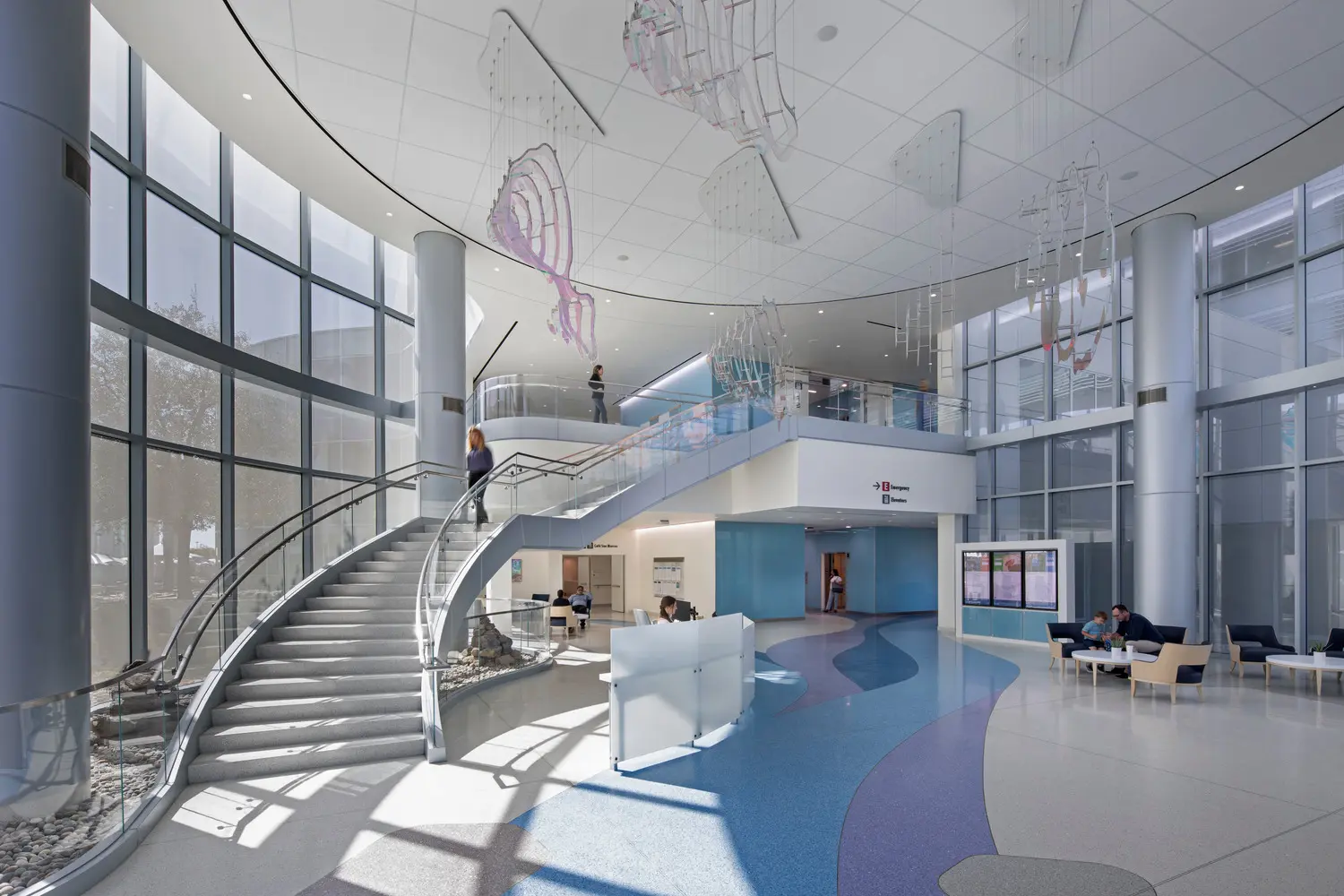
NABH hospital planning and healthcare architecture consultant by Soul Architects

NABH Hospital Planning

NABH Hospital Planning — Designing Healthcare Infrastructure for Compliance, Safety, and Operational Excellence

Healthcare architecture, infection control design, ICU planning, workflow optimization and NABH-oriented infrastructure for safer, future-ready hospitals.

Compliance, Safety and Healthcare Quality

Modern healthcare infrastructure has evolved far beyond the traditional concept of hospital construction.

Today, hospitals are highly sophisticated operational ecosystems where patient safety, infection control, healthcare workflow, emergency response, clinical efficiency, sustainability, technology integration, and long-term adaptability must function together seamlessly.

As healthcare standards continue evolving across India, NABH-oriented hospital planning has become one of the most important aspects of healthcare infrastructure development. Hospitals today are expected not only to provide advanced medical care but also to operate within carefully structured systems designed around patient safety, quality assurance, operational efficiency, and accreditation readiness.

At Soul Architects, healthcare architecture is approached through a strategic understanding of both architectural intelligence and healthcare operational systems. NABH hospital planning is viewed not as a checklist-driven process but as an integrated design philosophy where architecture directly supports quality healthcare delivery.

As a healthcare architecture and hospital planning consultancy, Soul Architects focuses on creating healthcare environments that are operationally efficient, future-ready, accreditation-oriented, sustainable, and deeply patient-centric.

Understanding NABH

Understanding NABH and Its Importance in Healthcare Infrastructure

The National Accreditation Board for Hospitals & Healthcare Providers (NABH) is India’s principal healthcare accreditation body operating under the Quality Council of India. NABH accreditation establishes structured standards focused on patient safety, healthcare quality, operational systems, and infrastructure planning.

NABH standards influence multiple aspects of hospital infrastructure including patient safety, accessibility, infection control, emergency preparedness, healthcare workflows, facility management, biomedical systems, and operational coordination.

Healthcare infrastructure designed without considering accreditation-oriented planning often faces major operational and infrastructural challenges later.

Hospitals attempting NABH accreditation frequently discover the need for workflow restructuring, circulation redesign, infection control upgrades, fire safety modifications, HVAC revisions, and patient safety improvements. These retrofits significantly increase long-term operational costs.

At Soul Architects, NABH principles are integrated during the earliest stages of healthcare planning to help institutions create infrastructure that supports both operational excellence and accreditation readiness.

Operational Excellence

Why NABH-Oriented Hospital Planning Matters

NABH-oriented planning is not simply about meeting regulatory requirements. It fundamentally improves how hospitals function operationally every day.

Healthcare infrastructure aligned with NABH planning principles can improve patient safety, workflow efficiency, emergency preparedness, infection prevention, operational coordination, staff productivity, patient experience, and long-term infrastructure scalability.

Modern healthcare environments require carefully planned systems for patient circulation, emergency movement, sterile workflows, waste management, accessibility, medical equipment integration, and healthcare technology systems.

At Soul Architects, healthcare planning is approached strategically to create hospitals that are efficient, safe, organized, and adaptable to future healthcare demands.

Architecture and Compliance

Architecture’s Role in NABH Compliance

Architecture directly influences healthcare quality and operational performance. The design of a hospital affects movement efficiency, emergency accessibility, infection transmission risks, patient comfort, staff coordination, departmental connectivity, and operational clarity.

NABH-oriented hospital architecture requires careful planning of zoning systems, circulation pathways, emergency systems, patient safety features, healthcare interiors, biomedical systems, and HVAC infrastructure.

Healthcare architecture should support healthcare delivery rather than create operational obstacles.

At Soul Architects, architecture is treated as an active component of healthcare systems rather than merely a physical structure.

Hospital Workflow Planning and Functional Zoning

One of the most important components of NABH hospital planning is workflow intelligence. Hospitals are complex operational ecosystems where multiple departments function simultaneously under highly time-sensitive conditions.

Workflow planning focuses on patient movement, emergency circulation, doctor and staff circulation, sterile and non-sterile zoning, biomedical waste movement, service circulation, and equipment logistics.

Poorly planned healthcare workflows can create overcrowding, patient confusion, delayed response times, increased infection risks, and operational inefficiency.

At Soul Architects, healthcare circulation systems are carefully analyzed to create efficient relationships between OPD, emergency, diagnostics, ICU, operation theatres, inpatient wards, and support services.

This improves both operational performance and patient experience.

Explore healthcare workflow optimization

Infection Control Through Healthcare Design

Infection prevention has become one of the most critical aspects of modern healthcare infrastructure planning. Healthcare architecture plays a direct role in reducing contamination risks and supporting safer clinical environments.

NABH-oriented infection control planning includes isolation zoning, airflow management, pressure-controlled spaces, sterile circulation, hand hygiene integration, clean and dirty pathway separation, and infection-resistant material selection.

Healthcare environments must support infection prevention through both engineering systems and architectural planning.

At Soul Architects, infection control principles are integrated into healthcare planning from the conceptual stage itself.

The objective is to create healthcare infrastructure that minimizes cross-contamination risks while maintaining workflow efficiency and patient comfort.

ICU Planning and Critical Care Infrastructure

Critical care facilities represent one of the most technically demanding aspects of healthcare architecture. Intensive Care Units require precision planning for emergency response, patient monitoring, staff visibility, equipment accessibility, infection prevention, medical gas systems, and airflow control.

ICU environments must support both clinical efficiency and patient recovery conditions.

Key ICU planning considerations include isolation room design, nurse station visibility, emergency access, acoustic control, patient privacy, family interaction zones, and future adaptability.

At Soul Architects, ICU planning integrates evidence-based healthcare design principles focused on patient safety, workflow clarity, and operational efficiency.

Explore ICU planning and design

Operation Theatre Planning and Sterile Infrastructure

Operation theatres require highly controlled architectural environments where sterile systems, HVAC precision, workflow separation, and emergency accessibility become critical.

NABH-oriented OT planning involves sterile zoning, scrub station planning, HVAC filtration systems, recovery room adjacency, equipment integration, and sterile circulation pathways.

Poorly planned surgical infrastructure increases operational risks and compromises workflow efficiency.

At Soul Architects, operation theatre planning is approached with emphasis on patient safety, surgical workflow optimization, infection prevention, and long-term flexibility.

Modern healthcare facilities increasingly require operation theatre systems capable of adapting to evolving medical technologies and surgical practices.

Emergency Preparedness and Hospital Safety

Healthcare facilities must remain operational even during emergencies. NABH-oriented planning emphasizes emergency preparedness through fire safety infrastructure, evacuation planning, emergency access systems, critical backup infrastructure, and disaster response planning.

Hospitals require integrated planning for fire exits, emergency circulation, backup utilities, emergency power systems, and healthcare continuity.

Healthcare architecture should support rapid emergency response while protecting vulnerable patient populations.

At Soul Architects, emergency readiness is integrated into healthcare planning strategies from the earliest design stages.

Accessibility and Patient-Centered Planning

Modern healthcare infrastructure must remain accessible, intuitive, and emotionally supportive for patients and caregivers.

Patient-centered planning includes accessible circulation, intuitive navigation, reduced patient stress, comfortable waiting spaces, patient privacy, and family-centered environments.

NABH-oriented healthcare planning increasingly emphasizes patient experience and accessibility as core aspects of healthcare quality.

At Soul Architects, healthcare environments are designed to create spaces that feel organized, reassuring, and human-centered rather than intimidating or confusing.

Sustainable Infrastructure

Sustainable Hospital Infrastructure

Hospitals are among the most resource-intensive building types. Sustainable healthcare infrastructure has become increasingly important for improving operational efficiency and reducing long-term environmental impact.

Sustainable hospital planning focuses on energy efficiency, daylight optimization, thermal comfort, passive cooling, water conservation, sustainable materials, and efficient HVAC systems.

Sustainable healthcare environments support reduced operational costs, healthier indoor conditions, long-term resilience, and environmental responsibility.

At Soul Architects, sustainability is integrated into healthcare architecture through intelligent planning strategies that improve both performance and environmental efficiency.

Explore sustainable hospital infrastructure

Future-Ready Hospital Planning

Healthcare systems continue evolving rapidly through digital healthcare integration, telemedicine, AI-assisted healthcare, advanced diagnostics, and smart medical systems.

Hospitals designed without future adaptability often become operationally outdated within years.

Future-ready healthcare planning requires scalable infrastructure, flexible departmental planning, technology integration readiness, and expansion-oriented master planning.

At Soul Architects, future adaptability remains a central component of healthcare infrastructure planning strategies.

Why Soul Architects

Soul Architects combines healthcare architecture, operational planning, workflow intelligence, sustainability, and patient-centered design to create healthcare infrastructure that supports long-term institutional success.

The practice focuses on healthcare specialization, NABH-oriented planning, operational efficiency, infection control, sustainable healthcare infrastructure, patient-centric design, and healthcare workflow optimization.

Every project is approached strategically to improve healthcare delivery systems through thoughtful architectural planning.

The objective is not merely to create compliant hospitals but to create healthcare environments that function intelligently, efficiently, and sustainably for decades.

Consultation Areas

Planning an NABH-Oriented Healthcare Infrastructure Project?

Whether you are developing a multispeciality hospital, critical care center, healthcare campus, diagnostic facility, or institutional healthcare project, strategic healthcare planning is essential for operational efficiency and accreditation readiness.

Soul Architects focuses on creating healthcare infrastructure that balances compliance readiness, patient safety, workflow intelligence, sustainability, future scalability, and healthcare functionality.

NABH Hospital Planning Healthcare Architecture ICU Planning Operation Theatre Planning Healthcare Interiors Infection Control Planning Sustainable Hospital Infrastructure

Frequently Asked Questions

NABH Hospital Planning FAQs

NABH hospital planning involves designing healthcare infrastructure according to standards focused on patient safety, workflow efficiency, infection control, accessibility, and operational quality.

NABH-oriented planning improves healthcare operations, accreditation readiness, patient safety, infection control, and long-term institutional efficiency.

Architecture directly influences circulation systems, infection control, accessibility, emergency preparedness, workflow efficiency, and patient safety — all critical aspects of NABH standards.

Hospital workflow planning includes patient circulation, emergency movement, sterile zoning, staff circulation, equipment transport, and service logistics.

Healthcare design directly affects contamination risks through zoning systems, airflow planning, material selection, and circulation pathways.

Services may include hospital master planning, ICU planning, OT planning, healthcare interiors, workflow optimization, infection control planning, and sustainable healthcare infrastructure.

WhatsApp
Call WhatsApp Enquire