
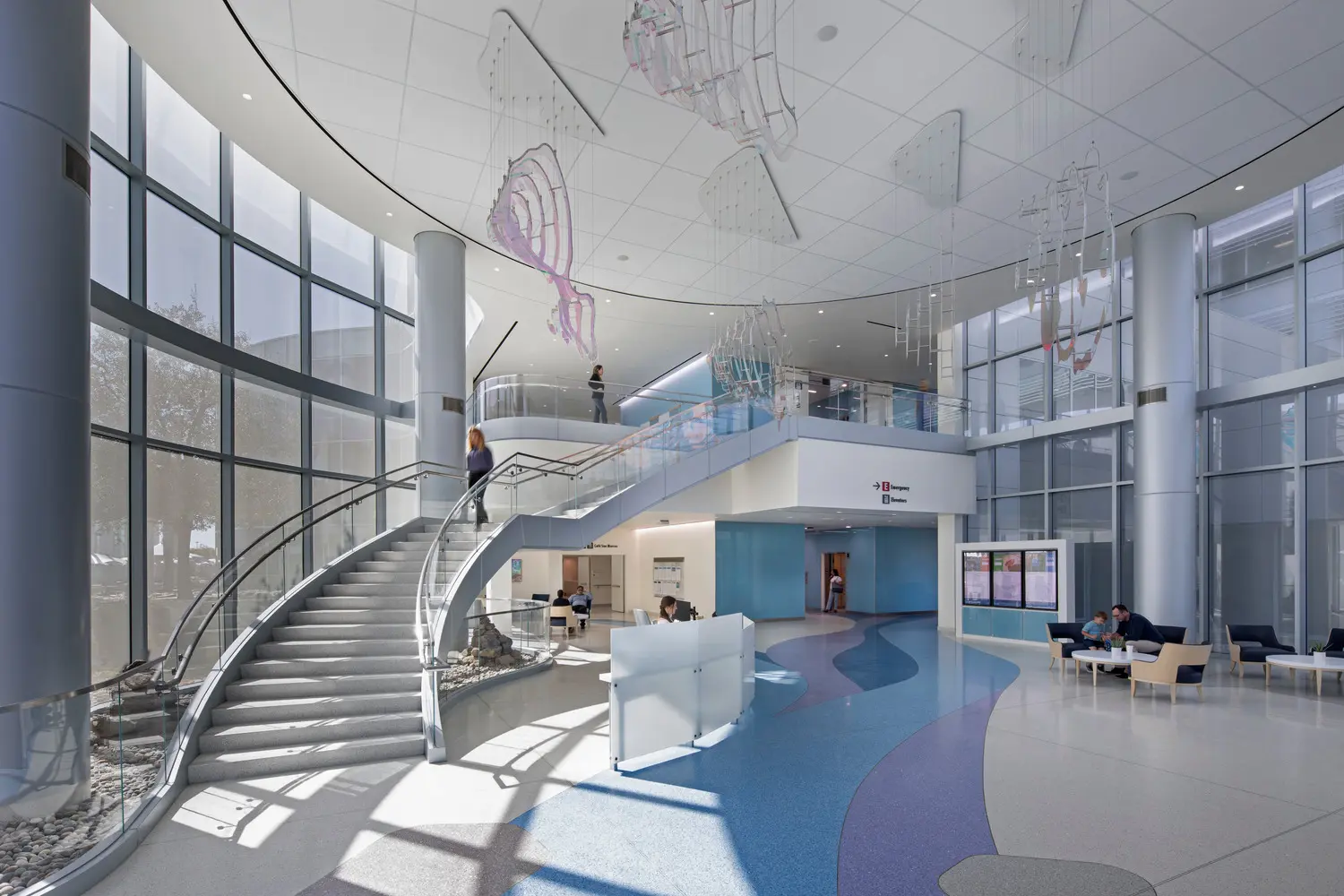
Hospital design consultant in Lucknow for healthcare planning by Soul Architects

Hospital Planning Consultant Lucknow

Hospital Design Consultant in Lucknow — Strategic Healthcare Planning for Future-Ready Medical Infrastructure

Healthcare architecture, NABH-oriented planning, ICU planning, patient flow optimization and sustainable hospital infrastructure for future-ready medical institutions.

Future-Ready Medical Infrastructure

Healthcare infrastructure has evolved into one of the most technically sophisticated and operationally demanding sectors within architecture.

Modern hospitals are no longer simply buildings containing consultation rooms and patient wards. They are highly interconnected systems where clinical workflows, patient experience, infection control, emergency response, sustainability, technology integration, and operational efficiency must function seamlessly together.

As healthcare infrastructure rapidly expands across Lucknow and the broader region of Uttar Pradesh, the need for specialized hospital design consultants has become increasingly critical. Hospitals today must support not only current healthcare operations but also future adaptability, evolving medical technologies, accreditation requirements, and growing patient expectations.

At Soul Architects, hospital planning is approached through a combination of healthcare intelligence, architectural strategy, operational planning, and evidence-based design. Every healthcare project is designed around the principle that architecture directly influences patient outcomes, staff productivity, healthcare delivery, and long-term institutional success.

As a hospital design consultant in Lucknow, Soul Architects focuses on creating healthcare environments that are patient-centric, operationally efficient, sustainable, technologically adaptive, and future-ready.

Lucknow Healthcare Growth

The Growing Demand for Advanced Healthcare Infrastructure in Lucknow

Lucknow has emerged as one of North India’s major healthcare and institutional hubs. The city continues witnessing rapid growth in multispeciality hospitals, medical colleges, critical care facilities, diagnostic centers, rehabilitation institutions, specialty clinics, and cancer care centers.

This healthcare expansion has increased the demand for specialized hospital planning consultants capable of understanding both architectural complexity and healthcare operational systems.

Unlike commercial architecture, healthcare infrastructure directly impacts human lives every day. Poor planning can create operational inefficiencies, patient stress, workflow disruptions, infection risks, and long-term institutional limitations.

At Soul Architects, healthcare planning begins with understanding how healthcare systems actually function operationally — not merely how buildings appear visually.

Patient flow Emergency response Infection control Critical care systems Medical equipment integration Biomedical engineering coordination Staff circulation HVAC systems Sustainability Future scalability

Specialized Hospital Planning

Why Hospital Design Requires Specialized Expertise

Hospitals are among the most complex building typologies in modern architecture. A healthcare facility functions as a continuously operating ecosystem involving patients, doctors, nurses, support staff, emergency systems, diagnostics, biomedical equipment, utilities, and critical operational workflows.

Every department within a hospital has unique technical and operational requirements.

Hospital design involves planning for outpatient services, emergency care, inpatient wards, operation theatres, ICUs, diagnostics, pharmacy systems, biomedical waste management, sterile circulation, service corridors, and healthcare interiors.

A successful hospital design must balance patient safety, operational efficiency, infection prevention, human-centered environments, accessibility, sustainability, and future adaptability.

At Soul Architects, hospital planning integrates architecture with healthcare workflow intelligence to create facilities that support efficient healthcare delivery and improved patient experience.

Operational Intelligence

Hospital Workflow Planning and Operational Efficiency

One of the most important aspects of healthcare architecture is workflow planning. Efficient circulation systems directly influence staff productivity, emergency response speed, patient satisfaction, and operational performance.

Hospital workflow planning focuses on patient circulation, emergency movement, staff movement, sterile and non-sterile pathways, service circulation, biomedical waste routes, visitor movement, and equipment transport.

Poorly planned circulation creates operational bottlenecks, overcrowding, delayed treatment, staff fatigue, and patient confusion.

At Soul Architects, healthcare circulation systems are carefully analyzed to create hospitals that function efficiently under real-world operational conditions.

Departments such as emergency, diagnostics, ICU, operation theatres, wards, and outpatient services must be strategically connected to optimize movement and reduce operational friction.

Explore hospital workflow optimization

NABH-Oriented Hospital Planning

Modern healthcare infrastructure increasingly requires compliance-oriented planning aligned with accreditation standards such as National Accreditation Board for Hospitals & Healthcare Providers (NABH).

NABH-oriented healthcare planning involves infection control zoning, accessibility standards, emergency systems, patient safety considerations, healthcare workflow optimization, biomedical systems integration, and fire and life safety planning.

Hospitals designed without accreditation-oriented planning often face costly modifications later.

At Soul Architects, compliance-sensitive planning principles are integrated from the earliest design stages to support long-term operational readiness and institutional growth.

Healthcare architecture should not treat compliance as an afterthought — it must be embedded into the infrastructure itself.

Explore NABH hospital planning

ICU and Critical Care Planning

Critical care facilities represent one of the most technically demanding components of healthcare infrastructure. Intensive Care Units require highly specialized architectural planning for emergency response, visibility, infection control, medical gas systems, equipment accessibility, nurse station efficiency, patient monitoring, and airflow management.

ICU planning must support rapid intervention, clinical efficiency, staff coordination, patient comfort, and family interaction.

Critical care environments also require careful acoustic and lighting considerations to reduce stress and improve recovery conditions.

At Soul Architects, ICU planning is approached through evidence-based healthcare design principles that balance technical precision with human-centered care.

Explore ICU planning and design

Operation Theatre Planning and Surgical Infrastructure

Operation theatres require highly controlled environments where sterile workflows, HVAC precision, equipment integration, and circulation zoning become critical.

Operation theatre planning involves sterile and non-sterile zoning, scrub station planning, recovery room adjacency, surgical workflow optimization, HVAC filtration systems, medical equipment integration, and emergency accessibility.

Modern hospitals increasingly require modular and future-ready operation theatre systems capable of supporting evolving healthcare technologies.

Soul Architects approaches surgical infrastructure planning through a strong focus on patient safety, workflow clarity, infection prevention, and future adaptability.

Healthcare Interior Design

Healthcare interiors directly influence patient psychology, comfort, navigation, and emotional experience.

Modern healthcare interiors should support emotional reassurance, stress reduction, intuitive navigation, patient comfort, operational efficiency, and staff well-being.

Healthcare interior planning involves therapeutic color palettes, infection-resistant materials, ergonomic layouts, acoustic control, healthcare lighting design, waiting area comfort, and wayfinding systems.

At Soul Architects, healthcare interiors are designed to create environments that feel calming, organized, and human-centered rather than intimidating or institutional.

Explore healthcare interior design

Sustainable Healthcare Infrastructure

Sustainable Hospital Design

Hospitals are among the most energy-intensive building types. Sustainable healthcare architecture has become increasingly important for reducing operational costs and improving environmental performance.

Sustainable hospital planning includes daylight optimization, passive cooling, thermal efficiency, energy-efficient systems, water conservation, sustainable material selection, and waste reduction strategies.

Sustainable healthcare infrastructure not only improves environmental responsibility but also creates healthier and more efficient operational environments.

At Soul Architects, sustainability is integrated into healthcare planning through intelligent architectural strategies rather than relying purely on technological systems.

Explore sustainable healthcare architecture

Future-Ready Healthcare Infrastructure

Healthcare systems continue evolving rapidly due to medical technology advancements, telemedicine, AI integration, digital healthcare systems, and changing patient expectations.

Hospitals designed without flexibility often become operationally outdated within years.

Future-ready hospital planning must support departmental expansion, equipment upgrades, smart systems integration, flexible infrastructure, and digital healthcare adaptation.

At Soul Architects, future adaptability remains central to healthcare infrastructure planning strategies.

Healthcare Master Planning

Large healthcare campuses and institutional healthcare developments require long-term master planning strategies.

Healthcare master planning includes phased development, campus circulation, infrastructure scalability, emergency accessibility, future expansion zones, parking systems, and public interface planning.

Effective master planning ensures healthcare institutions can evolve efficiently over decades.

Explore healthcare master planning

Why Soul Architects

Architectural thinking with healthcare planning intelligence.

Soul Architects combines architectural thinking with healthcare planning intelligence to create hospitals and healthcare facilities that are operationally efficient, patient-centric, sustainable, and future-ready.

The practice focuses on evidence-based healthcare design, workflow optimization, patient-centered planning, sustainable healthcare infrastructure, healthcare interiors, and institutional scalability.

Every healthcare project is approached strategically to improve both clinical functionality and human experience.

The objective is not merely to design healthcare buildings but to create healthcare environments capable of supporting better healthcare delivery for generations.

Consultation Areas

Planning a Hospital or Healthcare Infrastructure Project in Lucknow?

Whether you are developing a multispeciality hospital, healthcare campus, diagnostic facility, critical care center, or medical institution, strategic healthcare planning plays a critical role in long-term operational success.

Soul Architects focuses on creating healthcare infrastructure that balances operational intelligence, patient experience, sustainability, future scalability, and healthcare workflow efficiency.

Hospital Planning Healthcare Architecture ICU Planning Operation Theatre Design Healthcare Interiors Sustainable Hospital Design Healthcare Master Planning

Frequently Asked Questions

Hospital Design Consultant in Lucknow FAQs

A hospital design consultant specializes in planning healthcare infrastructure including hospitals, clinics, critical care units, healthcare interiors, and medical campuses with focus on workflow efficiency, patient experience, and operational functionality.

Hospitals are highly complex facilities that require planning for emergency systems, patient flow, infection control, HVAC systems, equipment integration, and operational coordination.

NABH-oriented planning involves designing healthcare facilities according to accreditation-related standards for patient safety, operational efficiency, infection control, and healthcare infrastructure quality.

Healthcare architecture directly influences staff productivity, patient experience, emergency response efficiency, infection prevention, and operational workflow.

Sustainable hospitals improve energy efficiency, reduce operational costs, create healthier indoor environments, and support long-term infrastructure resilience.

Hospital planning services may include healthcare master planning, ICU planning, operation theatre planning, healthcare interiors, workflow optimization, healthcare campus planning, and sustainable hospital design.

WhatsApp
Call WhatsApp Enquire