
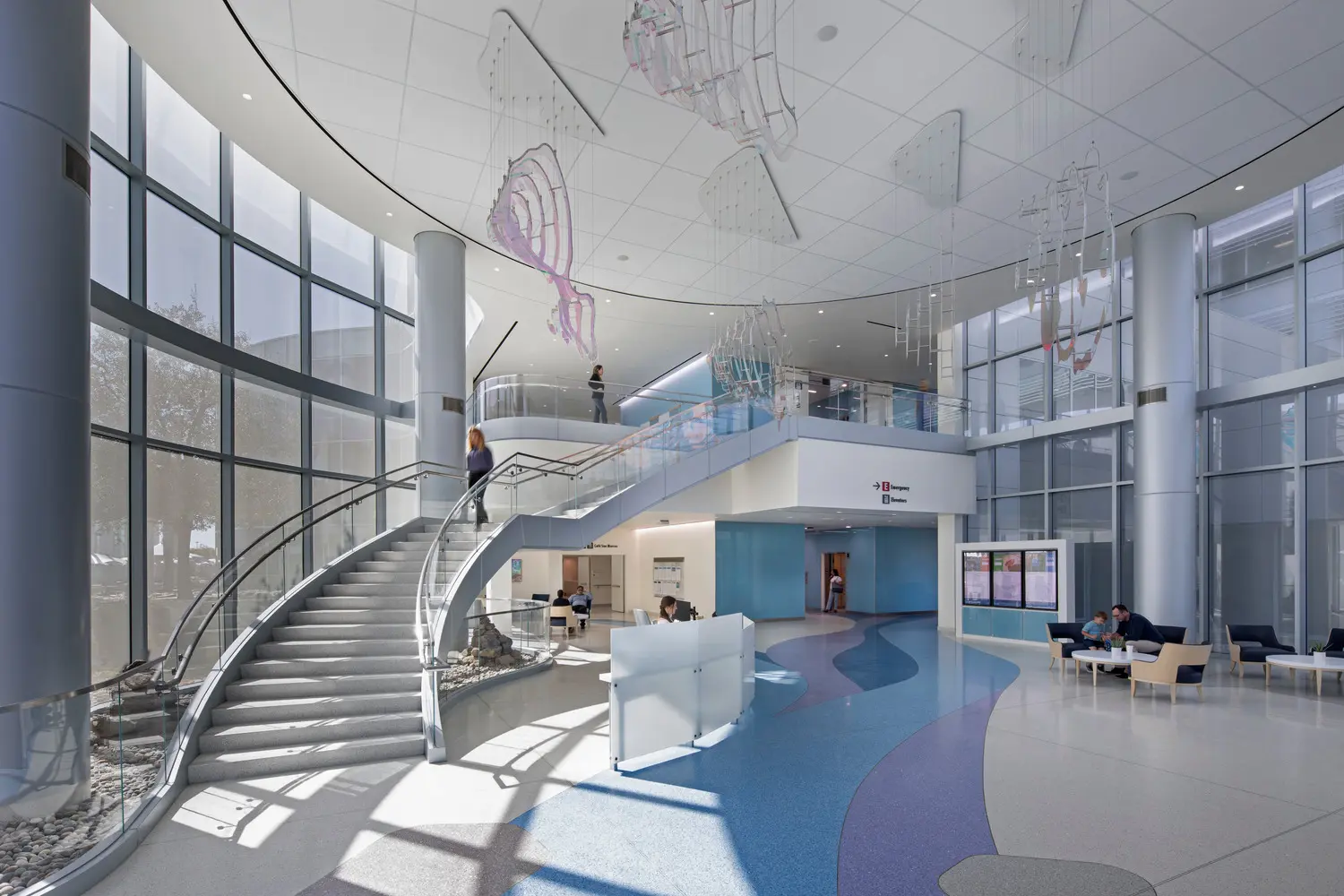
Sustainable hospital design and green healthcare architecture by Soul Architects

Green Healthcare Architecture

Sustainable Hospital Design — Building Future-Ready Healthcare Infrastructure Through Intelligent and Environmentally Responsible Architecture

Climate-responsive hospitals, energy-efficient healthcare infrastructure, sustainable interiors and future-ready healthcare planning for resilient medical environments.

Future-Ready Sustainable Healthcare

Healthcare infrastructure is among the most resource-intensive sectors within the built environment.

Hospitals operate continuously, consume significant energy, depend heavily on HVAC systems, generate large amounts of waste, and require complex operational infrastructure to support modern healthcare delivery.

As healthcare systems continue expanding across India, sustainable hospital design has become increasingly important for reducing environmental impact, improving operational efficiency, supporting healthier indoor environments, and creating future-ready healthcare infrastructure.

Modern healthcare architecture must now balance patient well-being, environmental responsibility, energy efficiency, operational resilience, climate responsiveness, technological adaptability, and long-term sustainability.

Sustainable healthcare architecture is no longer simply an environmental preference. It has become a critical component of future-ready healthcare planning.

At Soul Architects, sustainable hospital design is approached through a combination of healthcare intelligence, evidence-based planning, climate-responsive architecture, operational efficiency, and human-centered design. Every healthcare environment is designed to improve healthcare delivery while reducing long-term environmental and operational impact.

The objective is not merely to create “green buildings,” but to create healthcare environments that function intelligently, responsibly, efficiently, and sustainably for future generations.

Operational Sustainability

Why Sustainability Matters in Healthcare Infrastructure

Hospitals are among the highest energy-consuming building typologies globally due to continuous operation, HVAC-intensive environments, medical equipment demands, lighting requirements, critical care systems, and sterilization processes.

Healthcare infrastructure also generates biomedical waste, water consumption challenges, indoor air quality concerns, and thermal management complexities.

As healthcare infrastructure continues growing across India, sustainable healthcare planning has become increasingly necessary for balancing operational demands with environmental responsibility.

Sustainable healthcare design improves energy performance, long-term operational costs, patient comfort, indoor air quality, infrastructure resilience, and environmental efficiency.

Research increasingly emphasizes that sustainable healthcare environments can support healthier patient experiences while reducing environmental impact.

At Soul Architects, sustainability is integrated into healthcare planning from the earliest stages of architectural development rather than treated as an isolated technical layer.

High-Energy Healthcare Systems

Hospitals as High-Energy Buildings

Hospitals function continuously throughout the day and night, making them among the most energy-intensive infrastructure systems within urban environments.

Energy consumption in hospitals is driven by HVAC systems, medical equipment, lighting systems, air filtration, critical care infrastructure, operation theatres, and diagnostics.

Without intelligent planning, hospitals can face excessive operational costs, thermal inefficiency, environmental stress, and long-term infrastructure inefficiencies.

Sustainable hospital design focuses on reducing operational burden through intelligent architectural and engineering coordination.

At Soul Architects, healthcare environments are planned strategically to improve thermal efficiency, daylight utilization, ventilation performance, HVAC optimization, and energy-conscious infrastructure systems.

The objective is to create healthcare environments that remain operationally efficient over decades.

Climate Intelligence

Climate-Responsive Healthcare Architecture

Healthcare architecture in India must respond carefully to regional climate conditions. Climate-responsive design reduces energy dependence while improving comfort and operational efficiency.

Climate-responsive healthcare planning includes solar orientation analysis, passive cooling strategies, thermal performance optimization, natural ventilation integration, facade performance, and shading systems.

Hospitals designed without environmental responsiveness often become heavily dependent on artificial mechanical systems.

At Soul Architects, climate-responsive architecture forms an essential component of sustainable healthcare planning strategies.

The practice emphasizes orientation-sensitive planning, heat gain reduction, daylight optimization, and passive environmental performance.

These strategies help improve operational sustainability while enhancing patient and staff comfort.

Solar orientation Passive cooling Thermal performance Daylight optimization Facade strategy Shading systems Indoor air quality Operational resilience

Energy Efficiency in Hospital Design

Energy-efficient hospitals reduce long-term operational costs, environmental footprint, infrastructure strain, and carbon emissions.

Sustainable healthcare planning integrates efficient HVAC systems, energy-conscious lighting, building envelope optimization, intelligent zoning systems, and renewable energy strategies.

Research highlights that energy-efficient healthcare environments can significantly reduce operational burden while maintaining healthcare performance standards.

At Soul Architects, energy efficiency is approached through integrated planning rather than isolated technological solutions.

Architectural decisions themselves play a major role in improving healthcare sustainability.

Daylight and Healing Environments

Natural light plays an important role in healthcare environments. Evidence-based healthcare design increasingly emphasizes the relationship between daylight exposure, patient well-being, emotional comfort, and healing environments.

Healthcare daylight planning supports reduced patient stress, improved visual comfort, better indoor experience, and reduced artificial lighting dependency.

Daylight-responsive hospital planning includes facade optimization, patient room orientation, skylights, light wells, shading systems, and glare control.

At Soul Architects, daylight integration is approached carefully to balance healthcare functionality, thermal performance, visual comfort, and patient experience.

Healthcare spaces should feel calming and emotionally supportive rather than visually harsh or isolated from natural environments.

Explore patient-centric healthcare design

Biophilic Design and Healing-Centered Healthcare Environments

Biophilic design focuses on reconnecting people with natural systems through architecture and interiors. Research increasingly supports the positive psychological and emotional effects of nature-integrated environments within healthcare spaces.

Biophilic healthcare design may include healing gardens, landscape integration, natural materials, daylight-rich environments, visual connection to nature, and therapeutic outdoor spaces.

Healthcare environments designed around nature-oriented principles can improve emotional comfort, patient experience, stress reduction, and staff well-being.

At Soul Architects, healing-centered healthcare environments are designed to create calmer and more restorative healthcare experiences.

Sustainable HVAC Systems in Hospitals

HVAC systems represent one of the largest energy loads within healthcare infrastructure. Hospitals require sophisticated air handling systems capable of supporting infection control, air quality, thermal comfort, pressure control, and critical care airflow systems.

Sustainable HVAC planning focuses on efficient air handling, heat recovery systems, optimized zoning, energy-efficient mechanical systems, and smart environmental controls.

Healthcare engineering coordination becomes essential in balancing patient safety, infection prevention, energy efficiency, and operational sustainability.

At Soul Architects, HVAC integration is treated as a core architectural strategy rather than merely an engineering afterthought.

Explore ICU planning and design

Water Conservation in Healthcare Infrastructure

Hospitals consume significant water resources daily through sanitation systems, sterilization processes, cooling systems, and healthcare operations.

Sustainable healthcare infrastructure increasingly incorporates rainwater harvesting, water-efficient fixtures, greywater recycling, landscape water management, and efficient plumbing systems.

Water-conscious healthcare planning improves both environmental performance and long-term operational sustainability.

At Soul Architects, water conservation strategies are integrated into healthcare master planning to support future-ready infrastructure systems.

Sustainable Materials and Indoor Air Quality

Material selection directly affects indoor air quality, patient comfort, environmental impact, long-term maintenance, and healthcare hygiene.

Sustainable healthcare interiors increasingly emphasize low-VOC materials, non-toxic finishes, durable surfaces, recyclable materials, and environmentally responsible sourcing.

Indoor environmental quality plays a critical role in healthcare environments where patients and staff spend prolonged periods.

At Soul Architects, material selection balances sustainability, hygiene, durability, emotional warmth, and operational performance.

The objective is to create healthcare environments that feel healthier, calmer, and environmentally responsible.

Explore healthcare interior design

Sustainable Healthcare Interiors

Healthcare interiors should support patient comfort, emotional reassurance, operational efficiency, sustainability, and long-term durability.

Sustainable healthcare interiors integrate daylight-responsive spaces, environmentally conscious materials, efficient lighting systems, acoustic comfort, and healing-centered environments.

At Soul Architects, sustainable healthcare interiors are designed to support both environmental performance and emotionally supportive healthcare experiences.

Future-Ready Sustainable Healthcare Infrastructure

Healthcare systems continue evolving rapidly through digital healthcare integration, smart medical technologies, telemedicine, AI-assisted healthcare, and changing healthcare delivery systems.

Future-ready hospital planning requires scalable infrastructure, flexible layouts, resilient systems, and adaptable healthcare environments.

Sustainable healthcare architecture is fundamentally connected to long-term infrastructure resilience.

At Soul Architects, future adaptability remains central to sustainable healthcare planning strategies.

India Healthcare Growth

Sustainable Healthcare Infrastructure in India

India’s healthcare infrastructure sector is expanding rapidly, creating increasing need for environmentally responsible healthcare planning.

Sustainable hospital design in India must address climate conditions, energy demands, water management, urban infrastructure pressure, and healthcare scalability.

Healthcare institutions increasingly recognize sustainability as both an operational necessity and a long-term strategic investment.

At Soul Architects, healthcare sustainability is approached through integrated architectural thinking focused on long-term resilience and healthcare performance.

Why Soul Architects

Sustainable Healthcare Architecture for People, Performance and the Planet

Soul Architects combines healthcare architecture, sustainability, operational planning, evidence-based design, and human-centered thinking to create future-ready healthcare infrastructure.

The practice focuses on sustainable hospital design, healthcare architecture, healthcare workflow optimization, climate-responsive design, healing environments, sustainable healthcare interiors, and future-ready healthcare systems.

Every healthcare project is approached strategically to improve operational efficiency, environmental performance, patient experience, and infrastructure resilience.

The objective is to create healthcare environments that support both people and the planet responsibly.

Consultation Areas

Planning a Sustainable Healthcare Infrastructure Project?

Whether you are developing a multispeciality hospital, healthcare campus, critical care facility, diagnostic center, or future-ready healthcare institution, sustainable healthcare planning plays a critical role in long-term operational resilience and environmental performance.

Soul Architects focuses on creating healthcare environments that balance sustainability, operational intelligence, patient well-being, environmental responsibility, future scalability, and healthcare functionality.

Sustainable Hospital Design Healthcare Architecture Climate-Responsive Healthcare Planning Sustainable Healthcare Interiors Future-Ready Hospital Infrastructure Healthcare Master Planning Healing Environment Design

Frequently Asked Questions

Sustainable Hospital Design FAQs

Sustainable hospital design focuses on creating healthcare infrastructure that improves energy efficiency, environmental performance, patient comfort, operational resilience, and long-term sustainability.

Hospitals operate continuously and depend heavily on HVAC systems, medical equipment, lighting, filtration systems, and critical care infrastructure.

Daylight, indoor air quality, acoustic comfort, healing environments, and nature-integrated design can improve emotional comfort and patient well-being.

Climate-responsive healthcare design uses orientation, shading, passive cooling, daylight optimization, and environmental analysis to improve building performance.

Indoor air quality directly affects patient comfort, infection prevention, staff well-being, and healthcare environmental quality.

Services may include sustainable healthcare architecture, climate-responsive hospital planning, healthcare interiors, HVAC coordination, energy-efficient healthcare design, healthcare master planning, and future-ready infrastructure planning.

WhatsApp
Call WhatsApp Enquire