
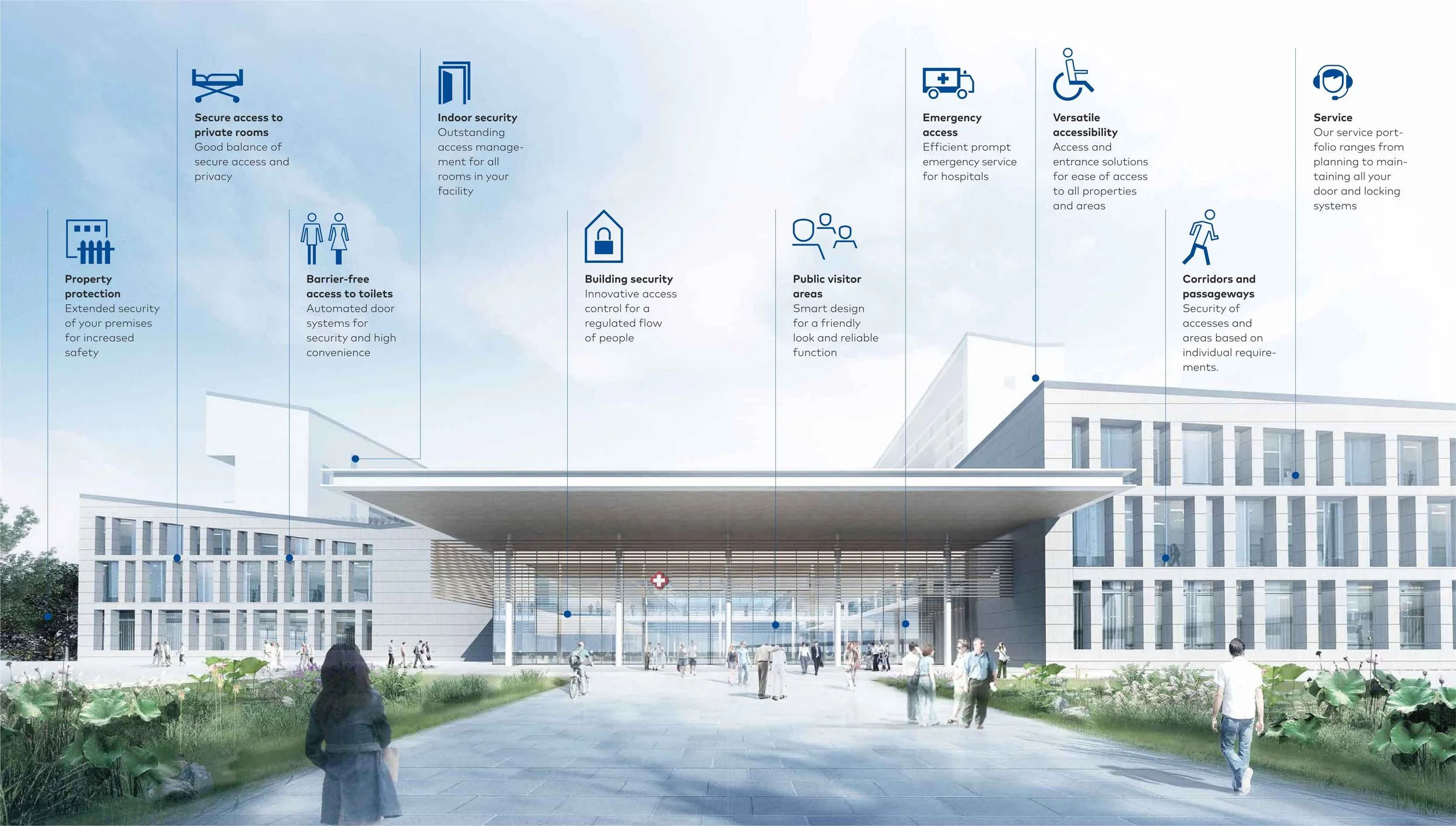
Multispeciality hospital design in Lucknow healthcare architecture case study by Soul Architects

Healthcare Architecture Case Study

Multispeciality Hospital Design in Lucknow — A Healthcare Infrastructure Planning Case Study

A project authority page documenting hospital planning strategy, patient flow, ICU integration, NABH-oriented design principles, healthcare interiors and sustainable infrastructure thinking.

Project Overview

A multispeciality healthcare facility planned as an operational system, not just a building.

This project authority page presents the planning logic behind a multispeciality hospital design in Lucknow, developed through the lens of healthcare architecture, patient movement, clinical workflows, infection control, healthcare interiors, and long-term infrastructure scalability.

Rather than treating the project as a visual portfolio feature, the design is documented as a healthcare systems exercise. The objective is to show how architectural planning can support clinical efficiency, patient comfort, staff performance, emergency response, NABH-oriented infrastructure, and future-ready healthcare operations.

The project reinforces Soul Architects’ healthcare specialization by connecting hospital design decisions to real operational priorities: departmental adjacency, patient flow, critical care planning, sustainable systems, healthcare interior experience, and phased growth.

TypologyMultispeciality hospital FocusHealthcare architecture and planning LocationLucknow, Uttar Pradesh Planning LensPatient flow, ICU, NABH, sustainability

Healthcare Infrastructure Vision

The design vision focuses on a hospital that remains efficient, humane and adaptable over time.

A multispeciality hospital must perform as a coordinated healthcare ecosystem where outpatient care, diagnostics, emergency response, critical care, surgical services, inpatient recovery, administration and back-of-house systems function with clarity.

The infrastructure vision prioritizes healthcare architecture services that balance clinical functionality with emotionally supportive environments. The planning approach treats circulation, zoning, visibility, material performance, daylight, and sustainability as core healthcare design decisions.

For Soul Architects, the success of a healthcare project depends on whether the facility improves healthcare delivery, reduces operational friction, supports patient dignity, and remains adaptable as medical technologies evolve.

Site Planning and Context

Site planning begins with access, hierarchy, climate and the movement of people under real hospital conditions.

The project’s site strategy considers the separation of public arrival, emergency access, service movement, staff entry, patient drop-off, parking, and potential future expansion. In healthcare infrastructure, site planning is not peripheral; it directly influences response time, patient stress, operational clarity, and long-term campus performance.

The design logic supports a clear public interface while protecting clinical zones from unnecessary congestion. Emergency movement is planned with directness, and service access is considered without compromising patient-facing experience.

Climate responsiveness also shapes the planning framework through orientation, heat-gain control, daylight strategy, and shaded transition zones. These decisions support both patient comfort and sustainable healthcare infrastructure.


Patient Flow and Workflow Planning

Patient journeys are planned to reduce confusion, waiting stress and operational bottlenecks.

Hospital planning depends heavily on circulation intelligence. The project studies outpatient movement, diagnostic adjacency, emergency transfer, inpatient access, staff circulation, sterile and non-sterile pathways, and service logistics as parallel movement systems.

Effective patient flow reduces unnecessary cross-movement and helps departments function cohesively. The relationship between OPD, diagnostics, emergency, ICU, operation theatre, wards and support services is approached as a healthcare workflow network.

This reinforces the same principles used in Soul Architects’ hospital planning consultant work: architecture should improve operational performance, not create hidden friction for patients or clinical teams.

ICU and Critical Care Integration

Critical care planning is treated as one of the most technically sensitive components of the hospital. ICU zones require efficient access, visibility, infection control, medical gas coordination, acoustic comfort, family-sensitive waiting, and staff support.

The design strategy connects ICU planning with emergency response, diagnostics, operation theatre adjacency, and controlled circulation. This improves care continuity while reducing movement delays during critical situations.

The project reinforces Soul Architects’ expertise in ICU planning and design, where clinical precision and human-centered care must work together.

NABH-Oriented Planning Principles

NABH-oriented planning is integrated as a design philosophy rather than a late-stage checklist. The project considers patient safety, accessibility, emergency movement, infection control, biomedical waste pathways, fire and life safety, and operational zoning from early planning stages.

Healthcare facilities that ignore compliance-oriented infrastructure often face costly retrofits later. By embedding NABH hospital planning principles early, the project supports safer and more organized healthcare operations.

Sustainable Healthcare Infrastructure

Hospitals are energy-intensive buildings that operate continuously. The project’s sustainable planning strategy considers daylight utilization, thermal performance, passive response, efficient HVAC coordination, water-conscious planning, durable materials and long-term operational resilience.

The goal is not to add sustainability as a decorative layer, but to reduce operational burden through intelligent architectural planning. Sustainable healthcare design improves comfort, environmental performance and lifecycle value.

This connects directly with Soul Architects’ work in future-ready healthcare infrastructure.

Healthcare Interior Design Strategy

Healthcare interiors influence patient psychology, wayfinding, stress levels, acoustic comfort, waiting experience, and perceived quality of care. The project’s interior strategy focuses on calmness, clarity, material hygiene, durability, lighting comfort and intuitive navigation.

Waiting areas, consultation zones, ICU interiors and public movement spaces are planned to feel organized and emotionally reassuring. This approach supports healthcare interior design that is both operationally efficient and healing-centered.

Future Scalability

The project is planned for growth, adaptation and healthcare technology change.

Healthcare buildings must respond to evolving clinical models, new diagnostic technologies, digital health systems, additional departments and changing patient volumes. Future scalability is therefore treated as a planning requirement from the beginning.

The project framework allows for expansion-sensitive zoning, adaptable departmental relationships, infrastructure planning, and long-term phasing logic. This makes the hospital more resilient as healthcare delivery evolves.

The planning approach also supports institutional credibility by showing that healthcare architecture must serve both present operations and future medical transformation.

Design Philosophy

Healthcare architecture should be precise enough for clinical systems and humane enough for patients.

The design philosophy behind the project is rooted in the belief that hospitals should not feel intimidating or operationally chaotic. They should provide clarity, dignity, safety, efficiency, and emotional reassurance.

Architecture becomes valuable when it helps doctors work better, helps staff move efficiently, helps patients navigate confidently, helps families feel supported, and helps institutions operate sustainably.

This is why the project is positioned not merely as a visual design exercise, but as a healthcare infrastructure planning document that reinforces Soul Architects’ authority as a healthcare architect in Lucknow.

Healthcare Expertise CTA

Planning a Multispeciality Hospital or Healthcare Infrastructure Project?

Whether you are developing a multispeciality hospital, critical care unit, diagnostic center, healthcare campus or institutional medical facility, early architectural planning directly affects operational performance and long-term value.

Soul Architects supports healthcare institutions through hospital planning, workflow strategy, ICU integration, NABH-oriented planning, healthcare interiors and sustainable hospital design.

Hospital Architecture Healthcare Planning ICU Integration NABH-Oriented Design Healthcare Interiors Sustainable Hospital Design
WhatsApp
Call WhatsApp Enquire